Sergio Nanni: (+39) 338 305 4973 | info@bestsardiniatrips.com

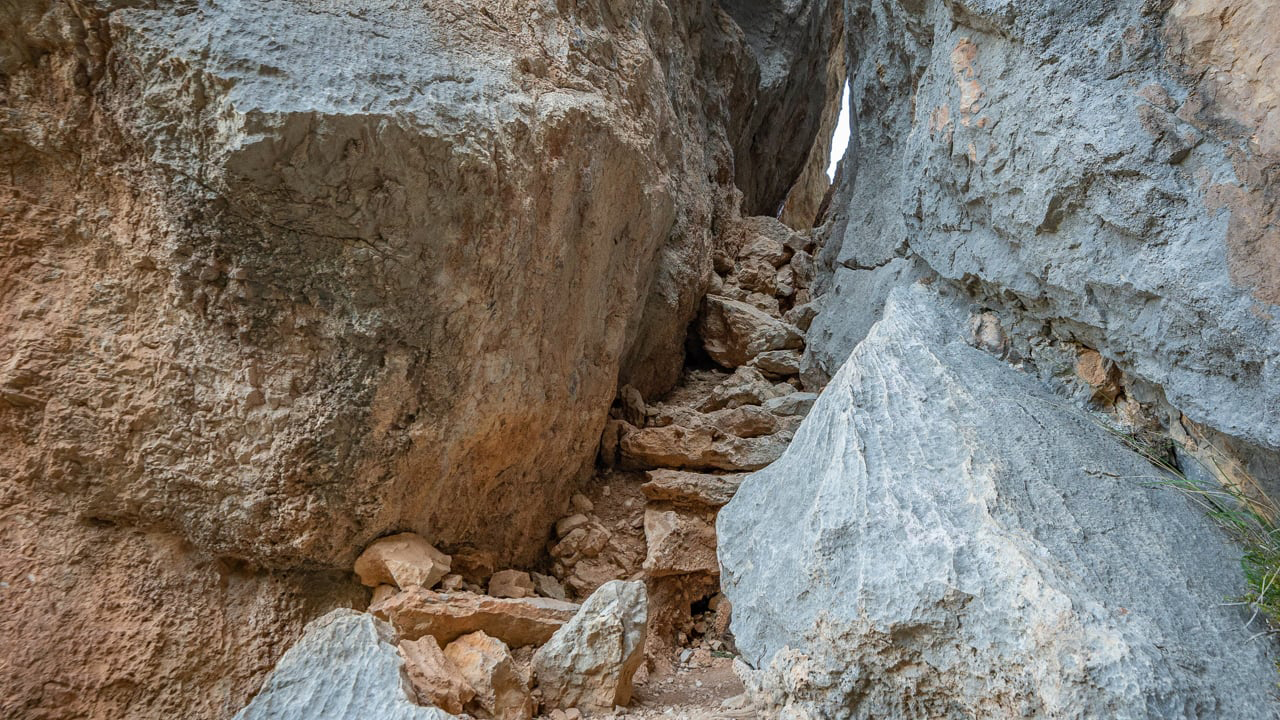
In the heart of the Supramonte, between Dorgali and Oliena, lies one of the most extraordinary archaeological sites in Sardinia: the nuragic village of Tiscali, concealed inside a large karst sinkhole. Invisible from the valley below, this prehistoric settlement brings together archaeology, landscape and mystery in a truly unique experience. Reaching Tiscali in Sardinia means venturing along ancient trails through the limestone rocks of the Supramonte, within the territory of the National Park of the Gulf of Orosei and Gennargentu, until you enter a hidden sinkhole invisible from the outside. It is inside this rocky basin, at approximately 700 metres above sea level, that the remains of one of the most evocative nuragic villages on the entire island are preserved.
History and Origins of the Tiscali Nuragic Village
The Tiscali site dates back to the Nuragic Age, between the Final Bronze Age and the Early Iron Age (approximately 11th–8th century BC), with evidence of occupation extending into the Roman Republican period. Archaeologists have identified the remains of circular huts built with local limestone, skillfully adapted to the irregular morphology of the sinkhole. The settlement includes around twenty residential structures arranged along the inner walls of the cavity, making the most of the available space and the natural protection offered by the rock. The choice of such a remote and hidden location in the Supramonte was clearly not accidental. According to the most widely accepted interpretations, Tiscali village was used as a refuge during a period of instability, most likely during conflicts with the Phoenician and later Roman populations who were expanding across the island. The natural isolation of the sinkhole provided protection and near-total control over access routes.
Tiscali and the Nuragic Civilisation in Sardinia
Tiscali village Sardinia represents a unique example within the broader context of the Nuragic civilisation, which between the 2nd and 1st millennia BC left nuraghi, villages and monumental complexes across the entire island. Sardinia today counts over 7,000 nuragic structures — the highest concentration in Europe. Unlike the great coastal or lowland nuraghi, such as Su Nuraxi di Barumini (a UNESCO World Heritage Site), the nuragic village of Tiscali is perfectly integrated into the mountain and karst landscape of the Supramonte, with no towers but full of historical significance. The imposing basalt towers typical of other nuragic sites are absent here: instead, a compact cluster of huts suggests an organised and stable community, capable of adapting to extreme environmental conditions. Excavations carried out during the twentieth century uncovered ceramic fragments, obsidian and bronze tools, as well as materials confirming the continuous use of the site during the protohistoric period.
How to Reach Tiscali: the Tiscali Hike in the Supramonte
Visiting Tiscali in Sardinia means walking through archaeology and wild nature along one of the most fascinating treks in the Supramonte: the renowned Tiscali hike. The site cannot be reached by car — access is exclusively on foot via two main routes.
Trail from Su Gologone (Oliena)
This is the most popular route for the Tiscali hike: approximately 5–6 km one way, with an elevation gain of 400 metres and an average walking time of 2–3 hours each way. The landscape along this trail is among the finest in the Supramonte, with holm oak forests, limestone cliffs and breathtaking views.
Trail from the Valle di Lanaitto (Dorgali)
This route crosses the Valle di Lanaitto, passing through canyons, caves and scenery of extraordinary beauty. It is an equally spectacular alternative, ideal for those who wish to explore a wilder part of the Sardinian Supramonte.
Practical Information for the Tiscali Hike
Both routes are rated as moderate difficulty: suitable for hikers with good physical fitness, they do not require technical climbing equipment. Before setting out on the Tiscali hike, it is important to:
- start in the early morning to avoid the heat
- carry plenty of water — there are no water sources along the trail
- wear hiking boots with non-slip soles
- consider hiring a licensed local guide, strongly recommended and in some periods
mandatory
The arrival at the sinkhole makes every effort worthwhile: the ruins emerge silently among the rocks, wrapped in holm oaks, phillyrea and Mediterranean scrub, in an atmosphere that feels completely outside of time.
Why Visit Tiscali Village Sardinia
Tiscali is a one-of-a-kind site: nothing quite like it exists anywhere else in the Sardinian nuragic landscape. Visiting Tiscali village Sardinia means:
- discovering one of the most mysterious archaeological sites in Sardinia
- exploring a nuragic village hidden inside a karst sinkhole
- hiking through the wildest and most spectacular scenery in the Supramonte
- experiencing one of the most fascinating treks in Sardinia
For lovers of archaeology, nature and trekking, Tiscali Sardinia is an absolute must — not only for its historical value, but for the exceptional landscape that makes it unlike any other nuragic site on the island. A visit to Tiscali is not just a hike: it is a journey through time, silence and the most authentic beauty of the Supramonte.
Tiscali Today: a Heritage to Protect
Like many archaeological sites in the Supramonte, Tiscali is a fragile place. Decades of unregulated tourism have caused damage to the structures, and access is now subject to increasingly strict protective measures. Staying on marked paths, not collecting artefacts or removing stones, not lighting fires and following the guidance of local guides are not simply rules: they are concrete acts of protection for a heritage that belongs to all of humanity.
FAQ – Frequently Asked Questions about the Tiscali Hike
How difficult is the Tiscali hike?
The routes to Tiscali are rated as moderate difficulty. They do not require technical equipment but do demand good physical fitness and appropriate footwear, given the rocky terrain and significant elevation changes.
How long does the Tiscali hike take?
The trail from Su Gologone (Oliena) takes approximately 2–3 hours each way. Including the visit to the archaeological site, it is advisable to plan a full day.
Can you visit Tiscali village Sardinia without a guide?
In certain periods, a licensed local guide is mandatory. In any case, it is strongly recommended: a guide helps you better understand the history of the nuragic village, the geology of the sinkhole and the natural features of the Supramonte.
What is the best time of year for the Tiscali hike?
The ideal periods are spring (April–June) and autumn (September–October), when temperatures are pleasant and the landscape is at its best. In summer, the heat can make the Tiscali hike very demanding.
Plan your Tiscali Hike with Best Sardinia Trips
Want to experience the Tiscali hike safely, fully and unforgettably? Best Sardinia Trips organises guided excursions to Tiscali village Sardinia with authorised and expert local guides, ready to take you on a journey through history, archaeology and the wild nature of the Supramonte.
Contact us to plan your Tiscali hike with a local guide and discover one of the most fascinating places in Sardinia.